





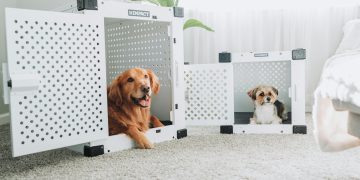
























Crate training gets a bad reputation. People assume it is cruel or that it stresses dogs out. The reality is the opposite. Dogs are den animals by nature, and a crate gives them a secure, predictable space that is entirely their own. Done right, crate training is one of the most useful things you can do for your puppy in the first few weeks.
Here is exactly how to do it in 7 days.
Before You Start: What You Need
You need the right size crate before anything else. It should be large enough for your puppy to stand up, turn around, and lie down but not so big that they use one corner as a bathroom. If you are buying for a growing puppy, get a crate with a divider panel so you can adjust the size as they grow.
MidWest iCrate with Divider Panel
Add a comfortable mat or blanket inside. Keep it simple and avoid anything too plush until you know your puppy is not a chewer.
Day 1: Introduction
Do not put your puppy in the crate and close the door on day one. That is the fastest way to create a negative association.
Instead, set the crate up in a common area where the family spends time. Leave the door open and let your puppy explore it on their own. Toss a few treats near the entrance, then just inside, then toward the back. Let them go in and come out freely.
The goal today is simple. The crate exists, it smells okay, and good things happen near it.
Day 2: Meals Near the Crate
Feed your puppy their meals right next to the crate. If they are comfortable, move the bowl just inside the entrance. Do not force it. Let them decide how far in they will go.
By the end of day 2 most puppies are eating comfortably just inside the crate door.
Day 3: Door Closes Briefly
Once your puppy is eating inside the crate without hesitation, close the door while they finish their meal. Open it as soon as they are done. Do not wait for them to whine. Open it before that happens.
Gradually extend the time the door stays closed after meals by a minute or two each session. Stay nearby so they can see you.
Day 4: Short Stays During the Day
Start putting your puppy in the crate for short periods while you are home. Use a simple cue like “crate” or “bed” every time. Toss a treat inside, let them follow it in, then close the door.
Start with 5 to 10 minutes. Work up to 30 minutes by the end of the day. Sit nearby at first, then gradually move out of sight for short periods.
A Kong stuffed with peanut butter is your best friend here. It keeps them occupied and builds a positive association with crate time.
Day 5: Building Up to an Hour
By day 5 your puppy should be comfortable with 30 minute stretches. Start working toward an hour. Continue using the crate during the day when you are home so they do not only associate it with being left alone.
If your puppy whines, do not immediately let them out. Wait for a brief pause in the whining, then open the door. Letting them out mid whine teaches them that whining works.
Day 6: First Night in the Crate
Place the crate in your bedroom or just outside the door so your puppy can hear you. Puppies sleep better when they can sense you are nearby.
Put them in the crate after their last bathroom break of the night, usually around 10 to 11pm for young puppies. Expect at least one overnight bathroom trip for puppies under 12 weeks. When they whine to go out, take them straight outside, keep it quiet and boring, then put them right back in the crate. No playtime, no fussing.
Day 7: Extending Crate Time
By day 7 most puppies are sleeping through a good portion of the night in their crate and tolerating 1 to 2 hour stretches during the day. Keep building gradually.
A general rule: puppies can hold their bladder for roughly one hour per month of age, plus one. So a 2 month old puppy can last about 3 hours max during the day.
Common Mistakes to Avoid
Using the crate as punishment. The crate needs to stay a positive place and you should never send your puppy there when you are frustrated with them.
Going too fast. If your puppy is consistently stressed or whining, back up a step. There is no prize for rushing.
Crating too long. Young puppies should not be crated for more than 3 to 4 hours at a stretch during the day. They need bathroom breaks and interaction.
Skipping the daytime practice. Puppies who only go in the crate at night take longer to adjust. Practice during the day too.
How Long Does Crate Training Take?
Most puppies are reliably comfortable in the crate within 1 to 2 weeks. Some take longer depending on age, breed, and temperament. Rescue dogs or puppies with anxious tendencies may need more time and patience. Consistency is the biggest factor. The more predictable the routine, the faster they settle.
One More Thing
If you have not already, check out our post on What You Need Before Getting a Puppy for a full list of everything you need before your dog comes home, including our top crate recommendations.
As an Amazon Associate I earn from qualifying purchases. This post contains affiliate links which means I may earn a small commission if you buy something at no extra cost to you.